Afterframe
Multi-model AI generation for creative and content operations
Built for: Creative teams, agencies, and organisations integrating generative media APIs
A working demonstration built by Omnific Hand to show our approach. Not a named client deployment.
The operational problem
Content teams wanted to use multiple image and video generation models without juggling separate tools, API keys, and inconsistent prompt workflows. Prototypes lived in notebooks and ad-hoc scripts. There was no single interface for comparing outputs, tuning prompts, or handing work to editors.
What we mapped first
- 1.
Mapped which models the team actually used versus which were experimental noise.
- 2.
Identified the handoff points between generation, review, and in-app editing.
- 3.
Agreed which outputs needed human review before export or client delivery.
- 4.
Defined integration requirements for API keys, rate limits, and model failover behaviour.
What we built
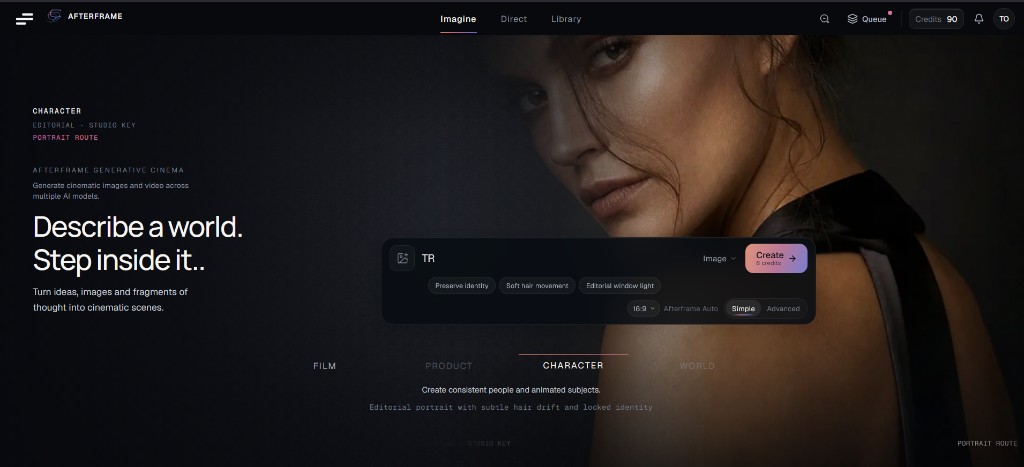
We built a production-oriented web interface that unifies multiple image and video generation models behind one prompt workflow, with in-app editing and clear labelling of model outputs.
- ·Single interface for multiple generation providers with consistent prompt handling.
- ·Side-by-side or sequential comparison of model outputs for the same brief.
- ·In-app editing and refinement without exporting to unrelated tools.
- ·Configurable model routing so teams can add or retire providers without rebuilding the UI.
How it works
Web application with provider abstraction layer for image and video APIs.
Prompt templates and tuning controls shared across models.
Asset management for generated outputs with version history.
Integration patterns suitable for client-controlled API credentials.
Information handling and control
- ·API credentials stored according to deployment environment requirements.
- ·No training on client content unless explicitly agreed and documented.
- ·Clear audit trail of which model produced each asset.
- ·Export controls so only reviewed assets leave the workspace.
What the client receives
- ·Multi-model generation interface with unified prompt workflow
- ·Provider integration layer for image and video APIs
- ·In-app editing and comparison views
- ·Administrator configuration for models and credentials
- ·Handover documentation for operators and integrators
Product views
Unified prompt workflow across multiple generation models.
Compare outputs from different providers on the same brief.
Refine outputs without leaving the production interface.
What changed
- ·Teams evaluate models against real briefs instead of isolated API experiments.
- ·Prompt workflows become repeatable rather than reinvented per tool.
- ·Review and export paths are documented before content reaches clients.
- ·The build demonstrates our approach to multi-vendor AI integration with clear boundaries.
What a similar project costs
Multi-model integration projects are scoped after discovery. A focused demonstrator over one or two providers is the usual starting point.
| Engagement | Indicative range | Notes |
|---|---|---|
| Integration assessment | From £650 | Provider mapping and workflow review |
| Single-provider pilot | From £2,000 | One model with production UI |
| Multi-model production platform | £6,000 to £16,000+ | Scoped to providers and editing needs |
Final pricing depends on scope, integrations, data sensitivity, and deployment environment.
Build something similar
Tell us about your organisation, the process or knowledge problem, and any systems we should know about. We will reply with an honest view of scope and the right starting point.